Mound 72: The Burial Mound Across the River With 270 People in It
October 12, 2026
📍 Mound 72, Cahokia Mounds State Historic Site, Collinsville, Illinois · See all stories on the map
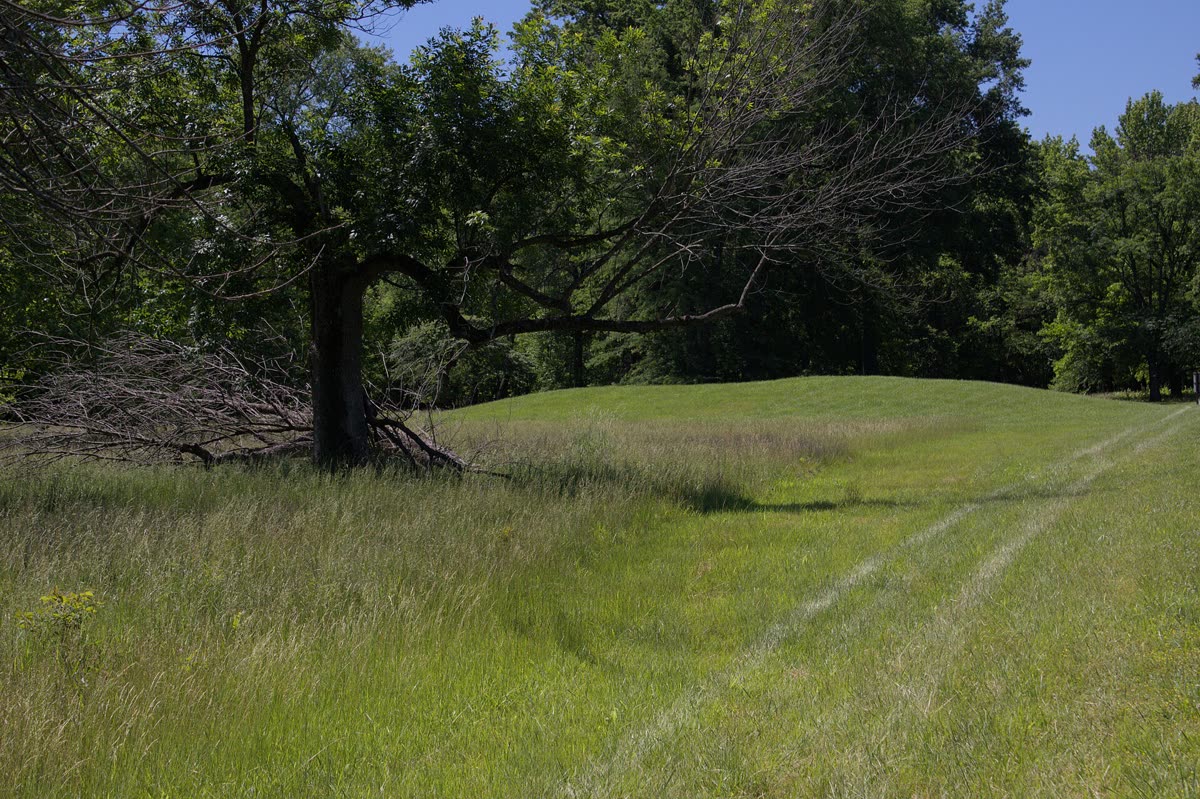
Roughly a thousand years ago, at Cahokia, a city across the river from present-day St. Louis, someone buried about 270 people in and around a low ridge-top mound. When archaeologists opened it in the late 1960s, they found more than fifty young women laid in two layers separated by matting, four men missing their heads and hands, and, in the middle of it all, one man placed on a bed of roughly 10,000 shell beads arranged in the shape of a falcon. The mound is called Mound 72. It sits in what is now Collinsville, Illinois, and the argument over what happened there has not stopped.
Archaeologists read many of the burials as human sacrifice, based on how the victims died and how they were laid down. The young women appear to have been killed by strangulation or blood-letting. Others, about 39 people in all, show fractures and decapitation. In some graves, the position of the fingers suggests that people may have been buried alive. The man on the beads, the “Birdman,” is the exception: a high-status burial placed in the midst of the others.
For decades, the standard explanation was tribute. The young women, researchers thought, were outsiders: offerings sent in from outlying communities, or captives. In 2015, a team from the Illinois State Archaeological Survey and the West Virginia School of Osteopathic Medicine tested that idea. They analyzed 203 teeth from 109 bodies for strontium, which records the geology of the place a person grew up. The result went the other way. “Our analysis provides evidence that suggests the young women may have come from within the region, if not from Cahokia itself,” said Phil Slater of the Survey.
That finding does not make the mound less strange. It makes it stranger. The victims weren’t strangers delivered from far away. They were most likely local people, killed in a city that was then growing into one of the largest in North America north of Mexico, and that is now a UNESCO World Heritage Site. Why remains an open question.
You can walk to Mound 72. It is a grassy swell of ground south of the main part of the site, and nothing about it tells you what is inside. The people who made it left no explanation. The people who dug it up have been arguing about it for more than fifty years.