The St. Louis Doctor Who Kept His Daughter in a Cave
October 12, 2026
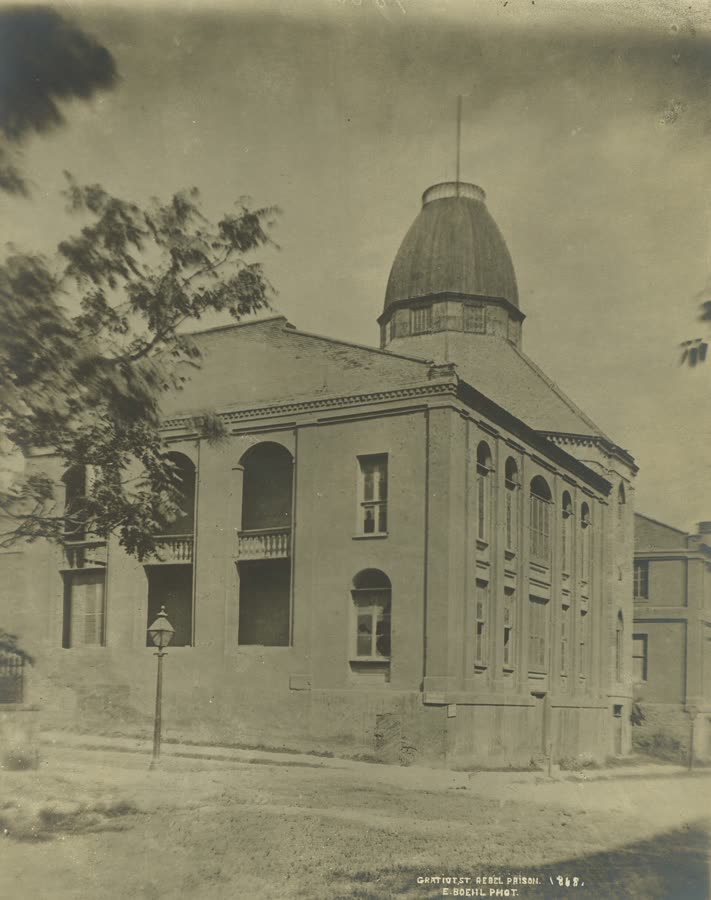
In 1840, a doctor named Joseph Nash McDowell founded a medical school in St. Louis that required every student to dissect a human body, at a time when the only reliable way to get one was a shovel. The neighbors, many of them German immigrants, did not love it. In 1849, a rumor that he had taken a missing woman for dissection brought hundreds of people to his door. That was not the strangest thing about him. The strangest thing was in a cave near Hannibal, Missouri, in a copper cylinder full of alcohol: his fourteen-year-old daughter.
McDowell was never caught digging anyone up. By most accounts it was common knowledge in St. Louis that his students were. The panic of 1849 shows how close the city came to acting on it. A woman named Mrs. Malter had disappeared, hundreds of German-American residents gathered outside the college demanding to search it, and McDowell reportedly prepared a defense with cannons, muskets and thirty armed students. Police talked everyone down. Mrs. Malter was later found alive.
Washington University’s Becker Library tells an earlier story, dating a similar mob scare to 1844. McDowell, it says, hid from the crowd among the cadavers, lying on a dissection table under a sheet. It is difficult to improve on a man whose best hiding place was the thing everyone suspected him of.
Then there is the cave. McDowell bought it in the late 1840s and used it as a laboratory for research on human bodies. When his daughter died, he did not bury her in a way his century would have recognized. He believed ordinary burial “stifled the soul,” and that a different kind of interment might help the living and the dead communicate. So a relative installed her in a copper cylinder of alcohol inside the cave. The arrangement lasted until locals started daring each other to break in and open it. McDowell had her moved, in 1849, to a family vault behind the college.
The cave is now Mark Twain Cave. A boy named Sam Clemens grew up in Hannibal exploring it, and McDowell is widely thought to be the model for the grave-robbing Dr. Robinson in Tom Sawyer. As portraits of a real person go, that one was not generous.
McDowell’s own fortunes were less strange but more bitter. A Confederate sympathizer, he was recruited as surgeon general of the Confederate Army of the West. Union forces seized his college and turned it into the Gratiot Street Prison, where they held captured Confederates. The man who had once hidden among the dead from a mob watched his school become a prison for men on his own side. He came back in 1865 to find it in ruins and rebuilt it with a colleague. He died in 1868.
He is buried at Bellefontaine Cemetery, which, given his views on burial, is either a surrender or a joke.